
Burgers · Since 1994 · Updated July 2026
Wendy’s Carolina Classic
The short answer
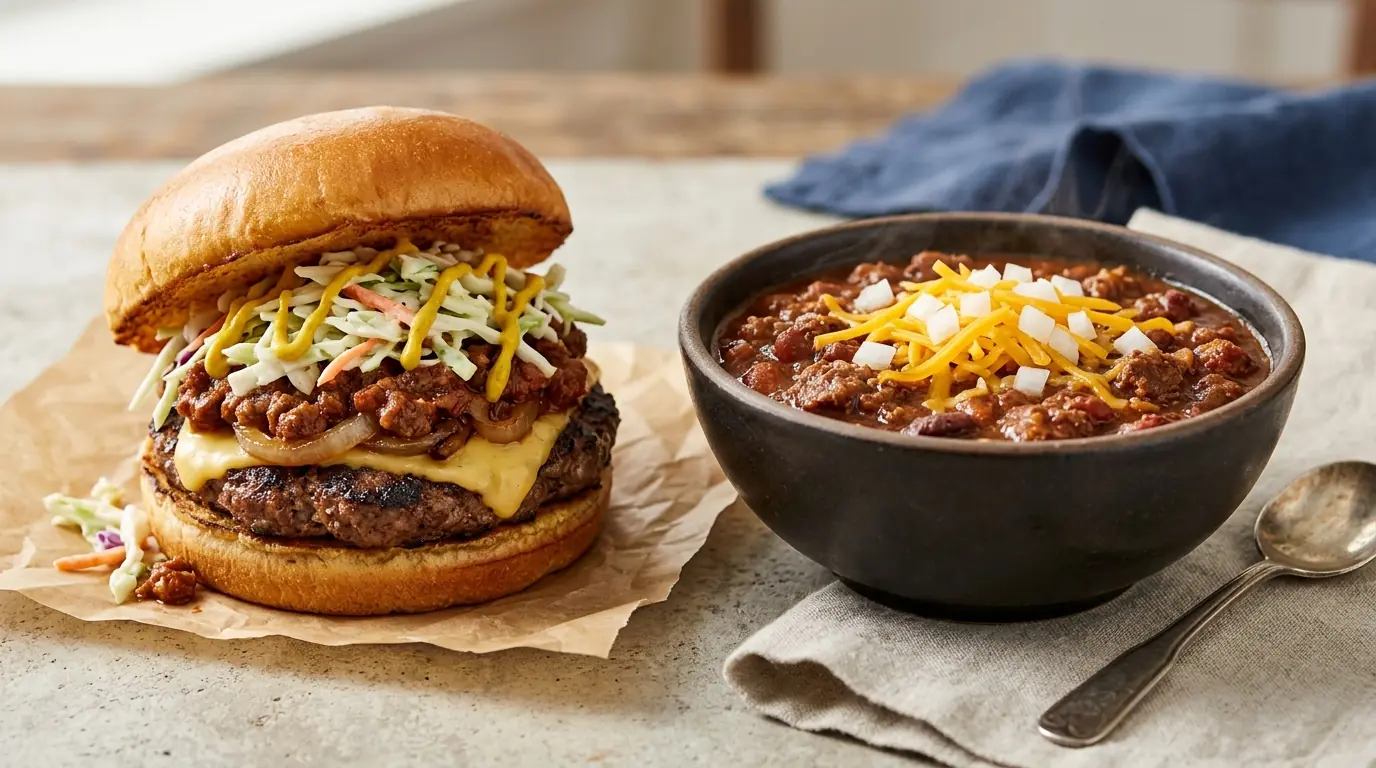
A quarter-pound patty topped with chili, coleslaw, diced onion and mustard, a recipe born in Rockingham, North Carolina in 1994. It runs 520 calories and about $5.66.
Price
$5.66
520 cal
Protein
—
quarter-pound patty
Sodium
—
Origin
1994
Rockingham, NC

By Sarah Jenkins · Wendy's Data & Menu Editor
Nutrition figures checked by Sarah Jenkins
Where did this come from?
The Carolina Classic first appeared at a Wendy’s in Rockingham, North Carolina in 1994. The combination, chili, coleslaw, diced onion and mustard, is a long-standing Carolina barbecue tradition rather than something Wendy’s invented from scratch; the burger just applied that regional topping style to a quarter-pound patty. It proved popular enough locally to get a national limited-time release in 1995.
Is it available where I am?
Not likely. The Carolina Classic is a regional item, not a national rollout. If you’re outside that footprint, you won’t find it on the menu board, though Wendy’s has brought it back for limited runs before and could again.
Carolina Classic questions
What is on Wendy's Carolina Classic?
A quarter-pound beef patty topped with chili, coleslaw, diced onion and mustard, no lettuce, tomato, cheese or mayo.
Where did the Carolina Classic come from?
It debuted at a Wendy's in Rockingham, North Carolina in 1994, built around a chili-slaw-onion-mustard combination that's a long-standing staple of Carolina barbecue culture. It went on to a national limited-time run in 1995.
Can I order a Carolina Classic outside the Carolinas?
It is a regional, limited-availability item rather than a standing national menu item. Check your selected restaurant before ordering.
How many calories are in a Carolina Classic?
520 calories, with 28g of protein and 720mg of sodium.
How much does a Carolina Classic cost?
This guide lists it at about $5.66 where available. Local prices vary.
What makes Carolina-style coleslaw different?
Carolina coleslaw is typically vinegar-based rather than mayonnaise-based, giving it a tangier, lighter profile that's meant to cut through rich barbecue flavors, which is why it works as a burger topping alongside chili.